

Moriah Evans with Jamar Roberts & Lizzie Feidelson
Moriah Evans works on and through forms of dance and performance. Her choreographies navigate utopic/dystopic potentials within choreography/dance/body, often approaching dance as a fleshy, matriarchal form slipping between minimalism-excess. She initiated “The Bureau for the Future of Choreography,” a collective apparatus, to create research processes and practices to investigate participatory performances and systems of choreography in 2011. Evans is a 2022 Guggenheim Fellow. She was an artist-in-residence at Movement Research, The New Museum, Lower Manhattan Cultural Council, Issue Project Room, Studio Series at Νew York Live Arts, ImPulsTanz, MoMA/PS1, MANA Contemporary, Onassis AiR, MacDowell. She was editor-in-chief of the Movement Research Performance Journal 2013-2020, curatorial advisor for the Tanzkongress 2019, co-artistic direction and editor of 2019.tanzkongress.de/salons (2019), and co-curator of Dance and Process (The Kitchen 2016-present). Her choreographic work has been presented by The Kitchen, Hirshhorn Museum and Sculpture Garden, SculptureCenter, Whitney Museum of American Art, MoMA PS1, Pace Live Danspace Project, Issue Project Room, Movement Research at Judson Church, American Realness, FD-13 (Minneapolis), Kampnagel (Hamburg), Theatre de l’Usine (Geneva), CDC Atelier de Paris (Paris), Rockbund Art Museum (Shanghai).
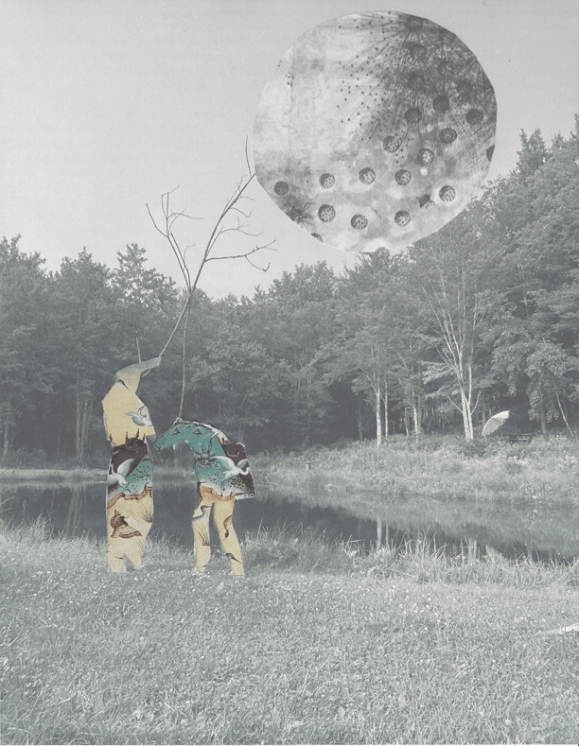
At Black Hole Hollow, Moriah engaged the framework of another audience to inform her research with dancers Jamar Roberts and Lizzie Feidelson for her forthcoming piece Remains Persist. Remains Persist uses expansive ideas of embodiment to excavate internal, imperceptible, and at times immaterial remains. What exactly constitutes “remains” are primary research questions. They are: parts left over after others have been removed, used, or destroyed; historical, personal, or archeological relics; bodies within bodies; ruins (and more!). Listening to and unfurling the curious, meta-mixture of “remains” alters how we inhabit the world. In this sense, working with the land, where processes of decay, rot, regeneration and various histories of human entwinement with the land (some wholistic, some violent, some ambivalent) are evident all around, enabled them to extend their research to their entanglements with the remains of the land. Listening closely to what the body holds is essential to the practice of Remains Persist. During their intensive rehearsals and sunrise and sunset performances, they broadened this form of close listening to encompass the land and entanglements in ways that pushed the limits of the body and how they attended to human and non-human forces, energies and rhythms with their own agencies and drives operating through, on and around them. Remains Persist broadens performance to encompass the more-than-human and the multitudinous content beneath and within surfaces of self, society, and nature.
Image credit: Lydia Orkent
Zena Bibler
& Katie Schetlick
Schetlick and Bibler are independent artists who have been collaborating together since 2009. Many of their collaborative investigations use dance improvisation as a strategy for challenging habitual ways of perceiving and engaging with “place.” Individually, the residency at Black Hole Hollow has supported each of their work as artists, researchers, and educators. Schetlick is creating a new course for undergraduates at the University of Virginia called “Movement and Environment” that invites students to question the tyranny of humanism and (re)generate embodied strategies for living with precarity on a damaged planet. Bibler is drawing on insights gathered through residency experiences to develop analytical and practical frameworks for cross-species attunement in a forthcoming PhD dissertation chapter. The residency has also supported their work as collaborators, by providing an opportunity to further develop a practice-as-research methodology that attempts to engage with performance sites as living collaborators rather than static backdrops. They are currently working on a ‘zine that distills some of their guiding questions and describes movement practices that emerged from the residency period, in the hopes that the material will support other artists that are interested in moving performance beyond human-centered perspectives.
decay
Inhabit decay.
Allow each of your movements to grow on top of the previous one.
Melt, rot, decompose.
Allow this to be the terrain for something unexpected to happen.
David Guzman
David Guzman is a multidisciplinary performer, dancer and lichen lover. He has performed in queer bars, traditional stages, parks and forests. His most recent performances have been in Bread and Puppet Theatre’s The Persians, which toured in New York and Chicago. He is currently a member of the Headlong Dance Theater Performance Institute cohort, a collaborator and dancer for Mina Nishimura, a translator of the book Experiments in Choreology, or, Where the Soviet Gesture Has Led Us and assistant to artists Ishmael Houston-Jones and Ni’Ja Whitson. Living and researching at another audience in 2021 has radically shifted David’s urges as a performer towards acknowledging the land that makes and unmakes him every day.
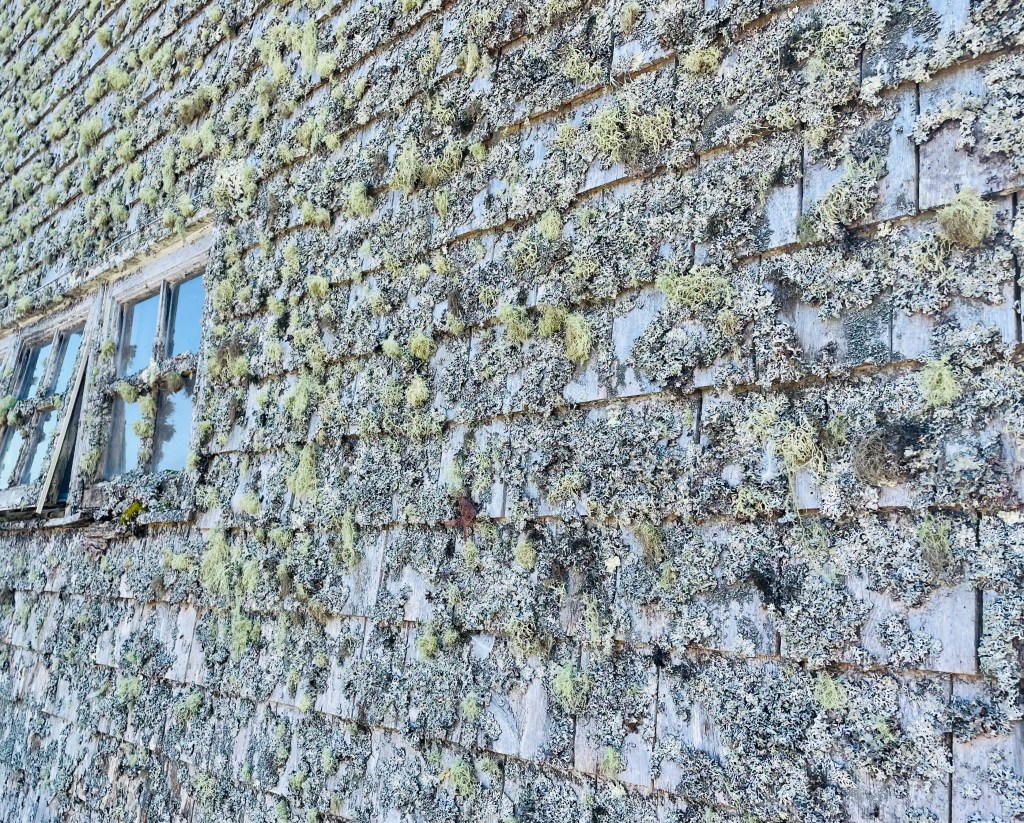
While at Black Hole Hollow, David cultivated specific rituals of embodying lichens sensorially, guiding his attention towards and through the knowledge accumulated with and about them in an attempt to imaginatively become them. He also developed rituals called “wandering, listening and observing” in an attempt to explore land acknowledgement as an ongoing, relational, embodied practice. Through his performance practice of visitations to certain parts of the land, David took the proposition of the residency very seriously: to perform for the land and to consider what shifting attention away from the theater of the human gaze could open up and reveal.
 BLACK HOLE HOLLOW