

2024 Another Audience Artist
Levi Gonzalez is a dance artist originally from Los Angeles, who was based in New York City from 1998-2016. He collaborates regularly with luciana achugar, and has performed extensively with Donna Uchizono Company, John Jasperse Company, Juliette Mapp, ChameckiLerner, Daria Faïn, and Michael Laub’s Remote Control Productions in Europe, among others. He was a founding editor of Critical Correspondence, an online publication of Movement Research, from 2006 to 2009. He served as Artistic Advisor for New York Live Art’s Fresh Tracks Residency Program from 2006 to 2014, and from 2012 to 2016 was the Director of Artist Programs for Movement Research. His choreographic work has been commissioned and presented extensively in New York City as well as nationally and internationally. He was a 2003-2004 Movement Research Artist-in-Residence, received a New York Foundation for the Arts Choreography Fellowship in 2006, and was a 2012-2014 Brooklyn Arts Exchange Artist-in-Residence. He is the recipient of numerous national residencies, and has participated in multiple artistic exchange projects in Eastern Europe, engaging with artists, writers, scholars and arts advocates throughout the region. He received his MFA in Dance from UCLA in June of 2019, and joined the dance faculty of Bennington College in Fall 2020.
Gonzalez’s current work involves subtly subverting the constructs of performance by highlighting the porous boundaries between audience and performer and investigating the queer corporeal logic of bodies as a sensual and radical means of re-organizing information and experience, and resisting normative definitions of body and desire.
Levi’s current project centers on improvised and constructed fairy tales to create transgressive and queer narratives that resist heteronormative concepts of desire and embodiment. Excavating the familiar yet fantastical trope of fairy tales allows us to explore our relationship to our own cultural histories and nostalgias, as well as our bodies, our sexualities and desires. With its emphasis on transformation and exploring the taboo or forbidden, the fairy tale trope allows for an opening of new possibilities for a radical acceptance of our unruly and aging bodies. This work also seeks, through live composition and improvisational practices, to highlight processes of transformation and becoming, another significant aspect of fairy tale narratives, and to embody the resistance towards arriving at a fixed idea of form or identity.
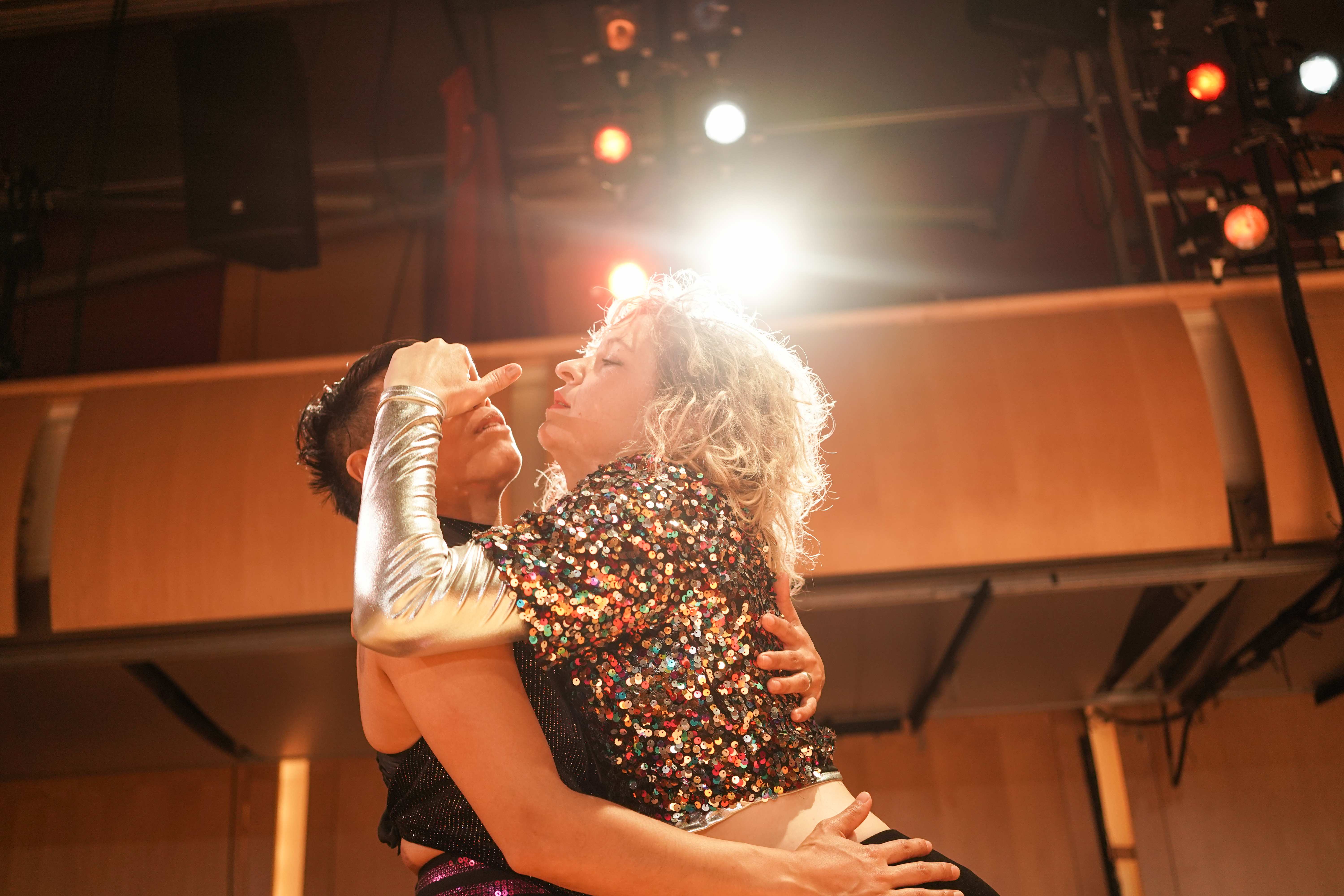


Addressing site is an integral aspect of this choreographic practice. Currently this involves creating semi-fictional histories of each location in which the work is shared, as well as using sound and utterance as vibratory tools to resonate with the particularities of these spaces. This activates the audience’s awareness of the context of the environment in which the performance takes place and the potential of using the imagination to expand the possibilities of our relationship to place and its influence on our perception and behavior. This project seeks to take this exploration beyond traditional performance venues and urban environments, exploring how these choreographic structures can exist in natural spaces that decenter the human, anthropocentric and constructed. This serves to alter our habituated nervous system responses, putting the work in conversation with larger notions of sustainability in relation to land and to the challenges and shortcomings of late capitalist embodied experience.
 BLACK HOLE HOLLOW